ASTM F1980 — Accelerated Aging of Sterile Barrier Systems
Support shelf-life claims before real-time data matures
What It Is
ASTM F1980 is the Standard Guide for Accelerated Aging of Sterile Barrier System Packages. It uses the Arrhenius reaction rate principle to expose sterile barrier materials to elevated temperatures, simulating months or years of ambient shelf life in a fraction of the time. Using a conservative Q10 factor of 2.0, one year of real-time shelf life can be simulated in approximately 52 days at 55 degrees C. This allows manufacturers to release product with a supported shelf-life claim while real-time aging studies run concurrently.
When You Need It
You need ASTM F1980 testing when establishing or extending a shelf-life claim for a terminally sterilized device, when you need to release product before real-time aging data is available, when making changes to packaging materials or sealing processes that affect shelf life, or when supporting regulatory submissions (510(k), CE marking) that require shelf-life evidence.
What We Do
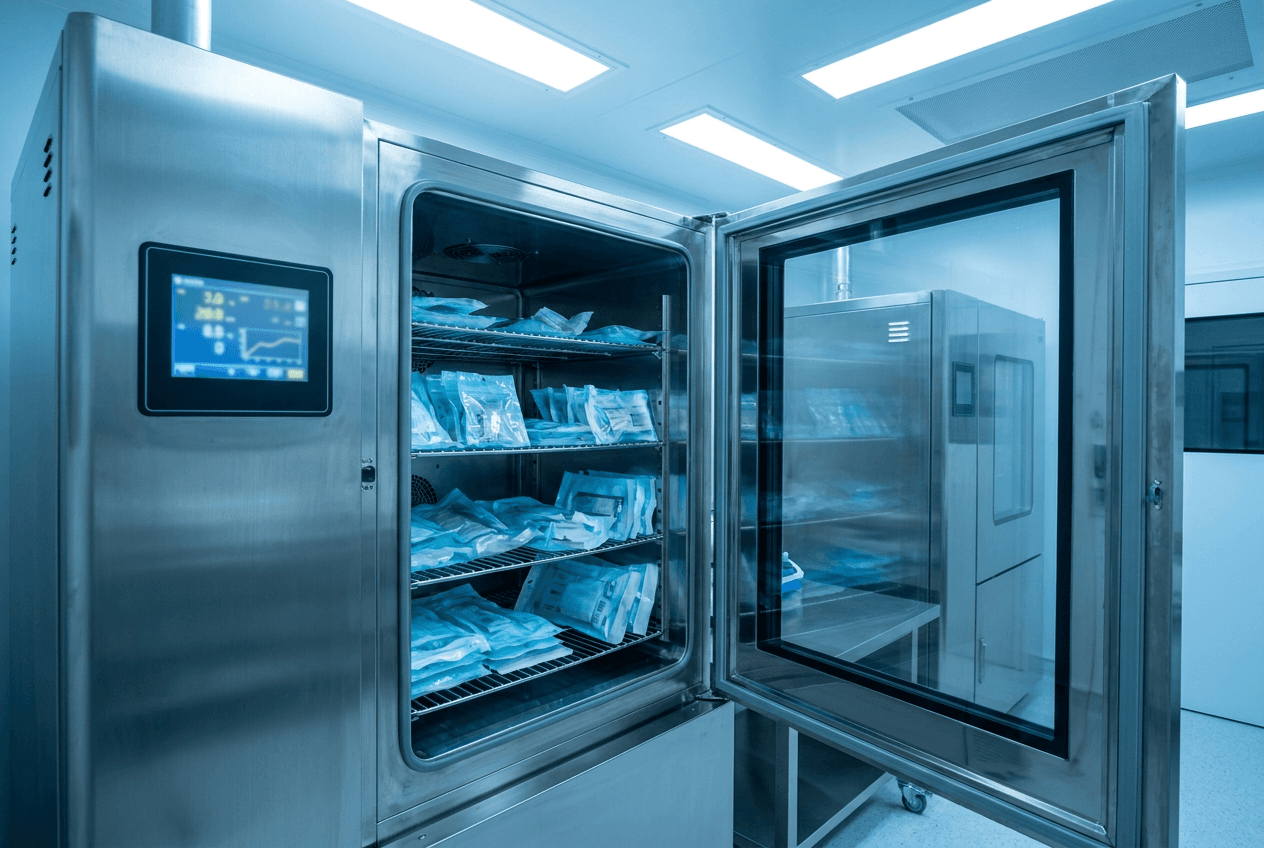
Boulder Package Testing executes ASTM F1980 accelerated aging protocols with paired real-time aging in calibrated temperature and humidity chambers. We set up one-year and multi-year aging cycles at 55 degrees C with continuous monitoring. After aging, samples proceed directly to integrity testing — dye penetration, bubble leak, seal strength, and visual inspection — under one protocol and one chain of custody.
Equipment & Methodology
Calibrated temperature/humidity aging chambers with continuous monitoring and data logging.
How It Fits Into ISO 11607
ASTM F1980 addresses the stability / shelf-life requirement of ISO 11607-1 Clause 6. Accelerated aging provides interim shelf-life support while real-time aging (also required) runs to completion.
Learn more about ISO 11607 validation programs →Frequently Asked Questions
What Q10 value should I use for accelerated aging?
ASTM F1980 recommends a conservative Q10 of 2.0 unless material-specific data supports a different value. A Q10 of 2.0 means the aging rate doubles for every 10 degrees C increase above ambient.
Do I still need real-time aging if I do accelerated aging?
Yes. Accelerated aging provides interim shelf-life support for product release, but real-time aging is required to confirm that accelerated results are representative. Both studies should run concurrently.
What aging temperature should I use?
Most ASTM F1980 protocols use 55 degrees C with controlled humidity. Higher temperatures shorten test duration but can introduce non-Arrhenius failure modes (such as adhesive melting), so the standard cautions against exceeding 60 degrees C for typical sterile barrier materials.
How long does ASTM F1980 testing take for a five-year shelf life?
Using a Q10 of 2.0 at 55 degrees C, simulating five years of real-time aging requires approximately 260 days (about 37 weeks) of accelerated aging time. Integrity testing is performed at intermediate timepoints and at the end of the aging period.
Ready to Start Testing?
Contact us to discuss your ASTM F1980 testing requirements.
Request a Quote