ISTA 3A — General Simulation Performance Test
Parcel delivery simulation for medical device packaging
What It Is
ISTA 3A is the International Safe Transit Association's general simulation performance test for packaged products weighing 150 lb or less shipped via parcel delivery systems. It subjects packages to a prescribed sequence of atmospheric conditioning, random vibration, shock (drop), and compression hazards designed to replicate the stresses of a small-parcel distribution cycle. For medical device manufacturers, ISTA 3A is one of the most commonly referenced distribution simulation profiles in ISO 11607 validation programs because it provides a repeatable, standardized way to demonstrate that a sterile barrier system can survive the rigors of shipping.
When You Need It
You need ISTA 3A testing when validating the distribution component of an ISO 11607 sterile barrier system qualification, when your device ships via parcel carriers (FedEx, UPS, USPS), when your customer or regulatory submission requires a recognized distribution simulation standard, or when you need to compare package performance across design iterations.
What We Do
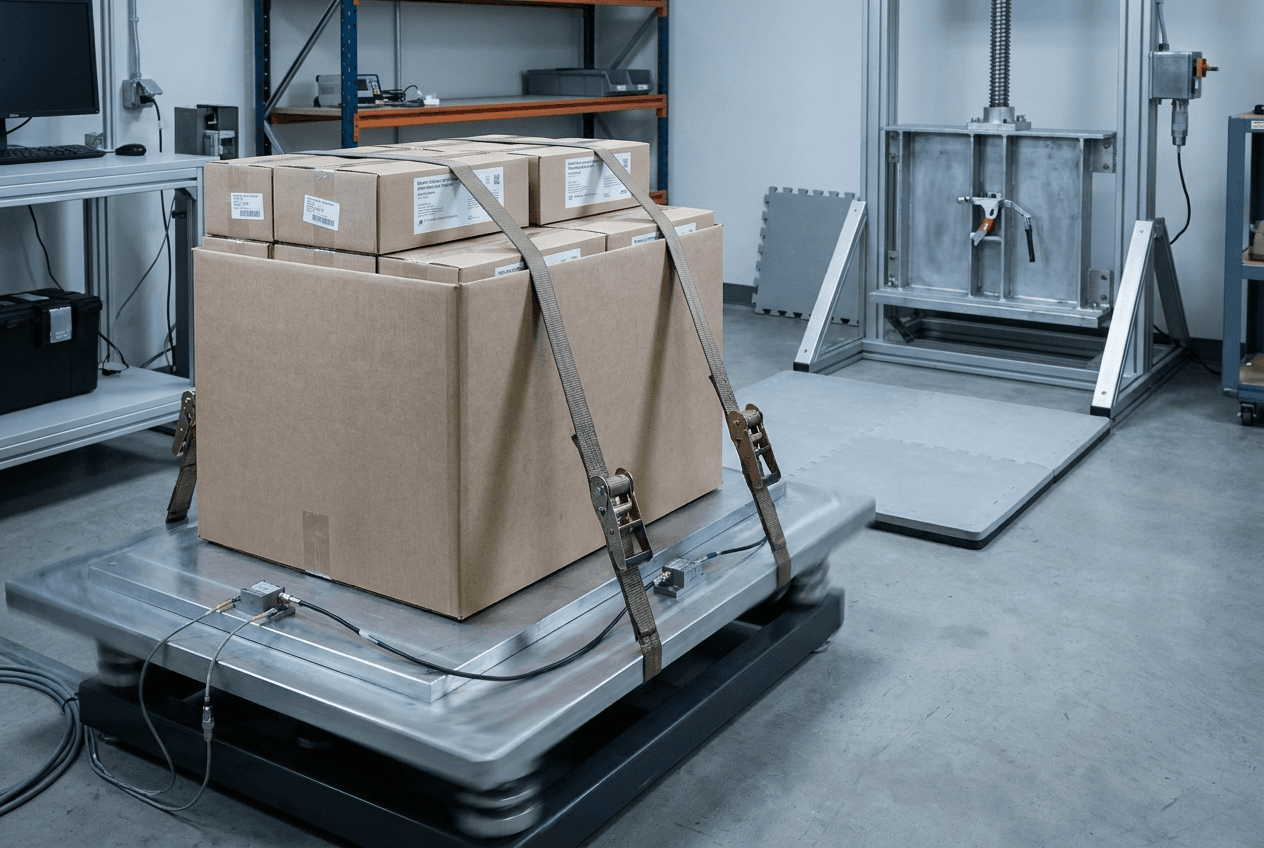
Boulder Package Testing executes ISTA 3A test methods in our Boulder, Colorado facility. We condition samples per ASTM D4332, then run the full ISTA 3A hazard sequence: atmospheric preconditioning, random vibration on a vibration table, drop testing from prescribed heights and orientations, and compression loading. After distribution simulation, samples proceed directly to sterile barrier integrity testing (dye penetration, bubble leak, seal strength, and visual inspection) — all under one chain of custody.
Equipment & Methodology
Vibration table, drop tester, compression tester, conditioning chamber — calibrated and maintained under the Boulder BioMed quality system.
How It Fits Into ISO 11607
ISTA 3A fulfills the distribution simulation requirement of ISO 11607-1 Clause 6. It is typically paired with accelerated aging (ASTM F1980) and integrity tests (ASTM F1929, F2096, F88, F1886) to form a complete sterile barrier validation.
Learn more about ISO 11607 validation programs →Frequently Asked Questions
What is the difference between ISTA 3A and ASTM D4169?
ISTA 3A is a prescriptive test profile with fixed hazard sequences for parcel shipments under 150 lb. ASTM D4169 is a flexible framework where you select assurance levels and hazard elements to match your specific distribution channel. Both are accepted for ISO 11607 distribution simulation.
How long does ISTA 3A testing take?
The physical test sequence for ISTA 3A typically takes 2-3 days per sample set, not including conditioning time. Within a full ISO 11607 validation program, distribution simulation fits into an 8-12 week overall timeline.
How many samples does ISTA 3A require?
ISTA 3A itself does not prescribe a fixed sample size — the number of test units is set by your validation protocol and statistical rationale. A common approach is to run three to ten packaged units through the hazard sequence and then evaluate sterile barrier integrity post-distribution.
Is ISTA 3A certification required for FDA submissions?
FDA does not require ISTA certification, but it does require that distribution simulation be performed to a recognized standard as part of ISO 11607-1 compliance. ISTA 3A is one of the most widely accepted profiles in 510(k) submissions for parcel-shipped medical devices.
Ready to Start Testing?
Contact us to discuss your ISTA 3A testing requirements.
Request a Quote