ASTM F88 — Seal Strength of Flexible Barrier Materials
Peel testing to verify forming and sealing process capability
What It Is
ASTM F88 is the Standard Test Method for Seal Strength of Flexible Barrier Materials. It measures the force required to separate (peel) a sealed area of flexible packaging, providing quantitative data on seal strength in units of force per width (typically N/m or lb/in). The test characterizes sealing process performance and helps establish seal strength specifications for incoming quality and process validation. For medical device sterile barrier systems, seal strength testing is a key element of both IQ/OQ/PQ validation and ongoing stability programs.
When You Need It
You need ASTM F88 testing when validating sealing processes for pouches, header bags, or lidded trays, when establishing seal strength specifications and control limits, when evaluating the effect of aging or distribution on seal performance, or when required by your ISO 11607 validation protocol.
What We Do
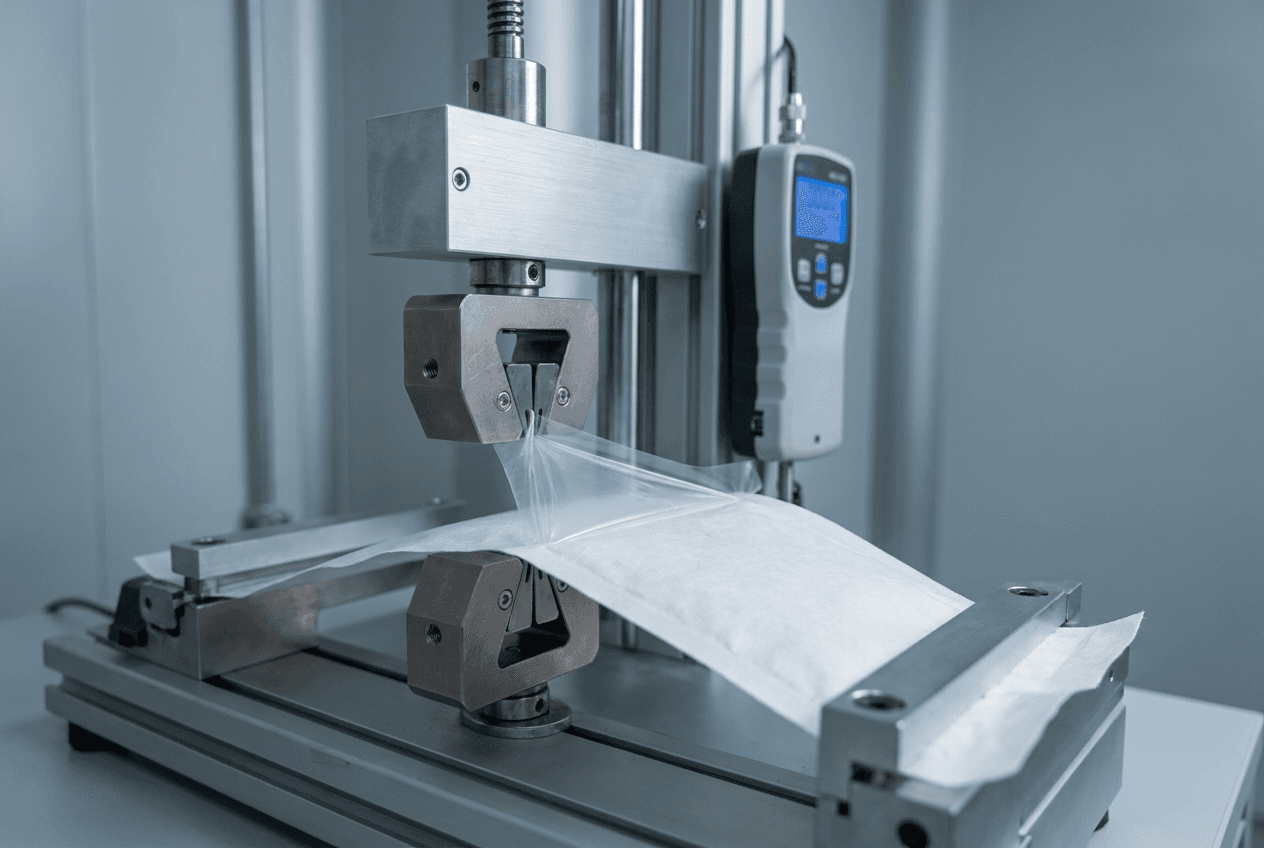
Boulder Package Testing executes ASTM F88 peel tests using calibrated tensile testing equipment. We test seals from all orientations and locations specified in your protocol, report peak force, average force, and failure mode (adhesive, cohesive, delamination, or material tear), and provide data in formats ready for statistical analysis and audit review.
Equipment & Methodology
Calibrated tensile tester with appropriate grips and fixtures for medical device packaging materials.
How It Fits Into ISO 11607
ASTM F88 is referenced in ISO 11607-1 and ISO 11607-2 for seal strength evaluation as part of packaging process validation and stability testing.
Learn more about ISO 11607 validation programs →Frequently Asked Questions
What failure modes does ASTM F88 identify?
ASTM F88 identifies four failure modes: adhesive failure (clean separation at the seal interface), cohesive failure (failure within the sealant layer), delamination (separation of material layers), and material tear (substrate breaks before the seal). Material tear or cohesive failure typically indicates a strong, well-formed seal.
How many samples do I need for ASTM F88 testing?
Sample size depends on your protocol and statistical requirements. A common approach is 10-15 peel specimens per test condition, but your ISO 11607 validation protocol should specify the exact sample size based on your statistical rationale.
What grip technique should I use for ASTM F88?
ASTM F88 defines three grip techniques: Technique A (unsupported), Technique B (supported at 90 degrees), and Technique C (supported at 180 degrees). Technique A is most common for medical device pouches, but the chosen technique must be documented and used consistently across all samples in a study.
What seal strength is acceptable for a sterile medical device pouch?
There is no single universal value — acceptance criteria are set by the manufacturer based on the packaging design, sealing process capability, and risk analysis. Typical heat-sealed pouch peel strengths fall in the 1.0 to 4.0 lbf/in range, with the lower bound defined by the manufacturer-set specification.
Ready to Start Testing?
Contact us to discuss your ASTM F88 testing requirements.
Request a Quote